The New Loneliness of the CEO: Making Decisions When Everyone Tells You to Move Faster
Today’s CEO operates under constant pressure.
The market demands speed. Teams look for direction. Customers expect immediate answers. Competitors always seem to move first, and boards expect fast results.
Everything pushes leaders to accelerate.
But the risk is mistaking speed for decision quality. For those leading a company, one of the most important skills is not running faster than everyone else, but knowing when to pause before making a decision.
Pausing does not mean wasting time
Many companies today operate in reaction mode.
A competitor launches a new initiative. A customer changes their request. A manager brings an urgent issue to the table. A consultant suggests a new priority. Within a short time, the CEO is faced with decisions that all seem important and all feel immediate.
But not everything that is urgent is strategic.
A new initiative can dilute focus. A hire made too quickly can weigh down the organization. An investment driven by fear can tie up valuable resources.
In these situations, pausing is not a sign of slowness.
It is strategic discipline.
It means distinguishing what truly deserves attention from what is simply creating noise.
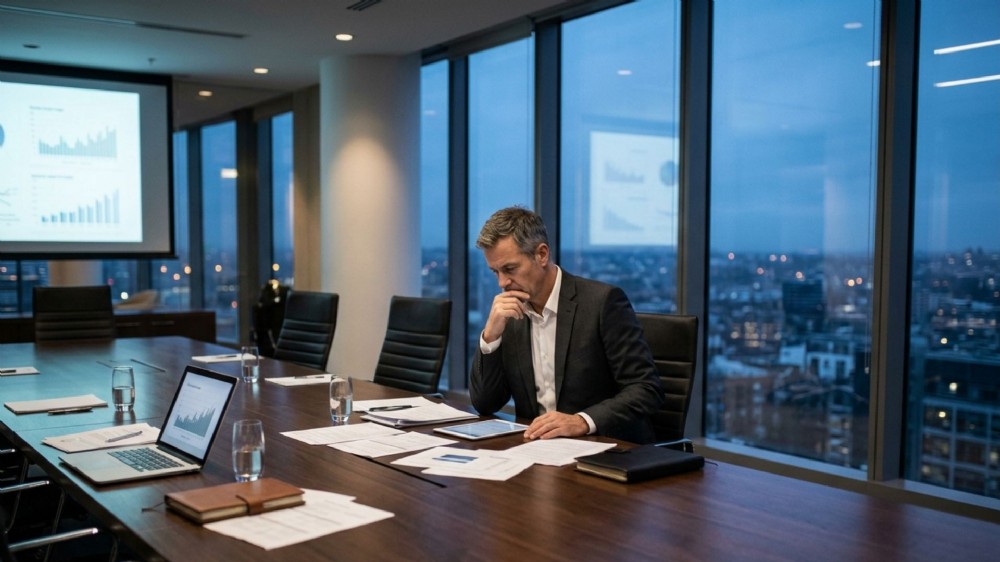
The CEO is alone when there is no real space to think
The loneliness of the CEO does not always come from a lack of people around them.
More often, it comes from the fact that many of the people around them have a role, an interest, or an expectation. Employees look for confidence. Shareholders expect performance. Customers want solutions.
In this context, it is not easy to pause. It is not easy to say, “I’m not sure.” It is not easy to show doubt when everyone is expecting direction.
And yet, many decisions improve precisely in that space: when someone helps the CEO slow down enough to see what daily pressure can easily obscure.
Is this decision coming from strategy or from pressure?
Are you deciding, or are you reacting?
Which risk are you not looking at?
Clarity comes before action
A CEO does not only need more information.
Often, they already have too much of it.
What they need is to filter better, distinguish priorities from noise, see alternatives they may not see on their own, and challenge their own assumptions before those assumptions turn into decisions that are difficult to reverse.
An important decision improves when it is examined from several angles.
Not to delegate responsibility, which always remains with the leader, but to improve the quality of thinking before action is taken.
When everyone accelerates, pausing can become a competitive advantage
The most delicate decisions should not be made solely under the pressure of daily urgency.
A Peer Advisory Board like REX exists precisely for this purpose: to create a confidential, structured space where those leading a company can pause, bring real decisions to the table, and exchange perspectives with other entrepreneurs and non-competing executives.
Not to receive ready-made answers, but to identify overlooked risks, unexplored alternatives, and consequences that are easier to underestimate when thinking alone.
Because when everyone tells you to move faster, the real advantage is not moving first.
It is thinking better before you move.



Log in