Hybrid Intelligence lives in the tension between these two mindsets—and the line separating them is thinner than it seems.
The difference isn’t in the tools being used. It shows up in the quality of decisions made over time.
AI doesn’t make you smarter—it amplifies what’s already there. It sharpens the thinking of those who are already clear, but it also magnifies the confusion of those seeking validation. It strengthens strategic vision—but just as easily reinforces inertia, bias, and intellectual complacency.
Speed without depth is just faster noise
AI can generate options at a pace that would have been unimaginable just a few years ago. But decision quality isn’t about having more options—it’s about recognizing the right one among many that all seem reasonable.
That ability isn’t technological. It’s cognitive—and emotional.
It requires judgment, pattern recognition, and real-world experience. It demands the discipline to sit with uncertainty instead of defaulting to the most convenient answer. And sometimes, it takes courage: choosing the path that’s hard to defend in a meeting, but fully aligned with your long-term vision and values.
AI can accelerate answers. It cannot improve your judgment—or decide for you.

The hidden trap of cognitive comfort
When answers are instant, articulate, and consistently convincing, the temptation to stop questioning them becomes almost invisible.
You slowly shift from thinking to validating.
Thinking doesn’t disappear—it gets simplified. And over time, it weakens.
From the inside, this feels like progress: faster execution, higher productivity, greater clarity. But often, what’s really happening is a lowering of the cognitive effort required to decide. And once that threshold drops, it’s hard to raise it again.
Three capabilities AI cannot build for you
There are three capabilities no language model can develop on your behalf: curiosity, creativity, and open-mindedness.
These are not fixed traits—they are muscles. They strengthen with use and deteriorate when neglected:
-
Curiosity: asking better questions—even when you think you already know the answer
-
Creativity: connecting distant dots in unexpected ways
-
Open-mindedness: being willing to change your mind when the evidence challenges you
A CEO who outsources thinking to AI is weakening exactly the capabilities the market now demands at a higher level.
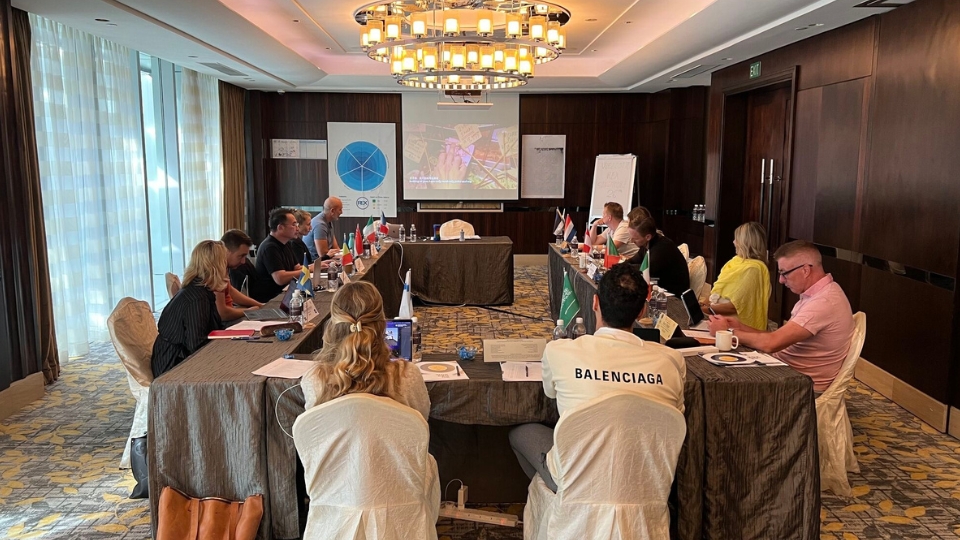
The goal isn’t to have more answers. It’s to see what you cannot see on your own.
And that requires a different kind of environment.
Not teams that default to alignment. Not advisors who sell solutions. But peers—people operating at your level of responsibility, with no incentive to please you, and the freedom to challenge you directly.
This kind of exchange only works when it is structured and intentional. Not occasional conversations, but recurring, disciplined confrontation with perspectives that stretch your thinking. Diverging viewpoints. Productive friction. Questions you wouldn’t ask yourself.
That’s where curiosity, creativity, and open-mindedness are truly developed.
Not alone in front of a screen.
And certainly not through tools designed to agree with you.




Log in